Super Bowl LX: What Works Still Could Be Ignored

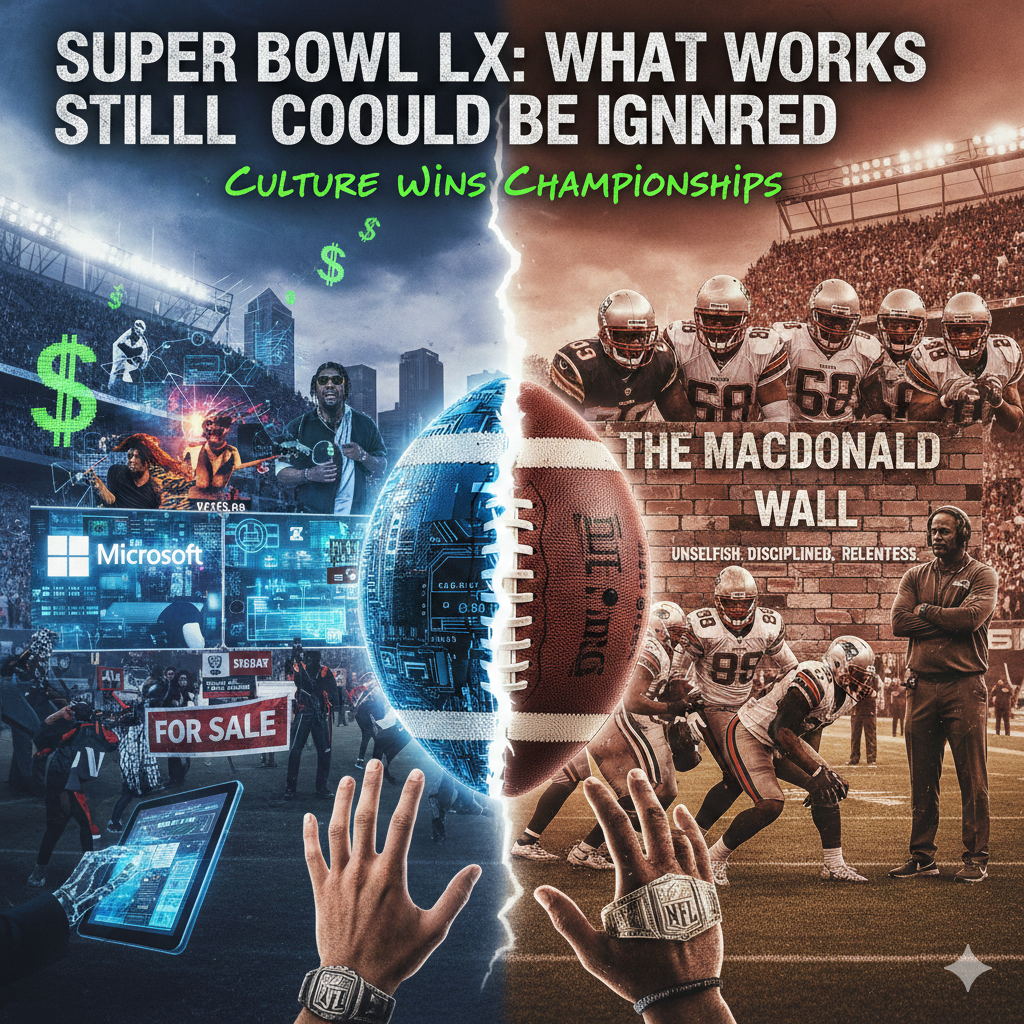
Introduction: Culture Wins Championships
Congratulations to the Seattle Seahawks on a dominant Super Bowl LX victory. Huge respect to Sam Darnold for staying composed under fire and to Super Bowl MVP Kenneth Walker III for absolutely gutting it out on the ground. To the rest of that Seahawks roster: you proved that when a team buys in, they’re unstoppable.
We also have to give a massive shout-out to the New England Patriots. The turnaround they pulled off—going from a 4-13 dumpster fire to AFC Champions in one year—is exactly why we watch this game.
What made this Super Bowl special wasn't just the flashy plays; it was the fact that both these teams had been stuck in the cellar for years. They didn't claw their way out by just buying superstars or chasing "guru" hype. They built a real, unselfish culture. You could see it on the TV—every guy in a jersey playing for the man next to him. That’s how you win without a roster full of "Names."
Even with the lopsided score, the Patriots' defense was no joke. They made Sam Darnold earn every inch. But Darnold did exactly what a leader is supposed to do: he put the team first, took care of the rock, and didn't try to be a hero when he didn't need to be. And we can’t talk about this game without mentioning the kicker. Jason Myers put on a clinic, breaking the record for most field goals made in a Super Bowl. In a game of inches, he was the difference-maker, and honestly, he deserved a serious look for MVP.
Super Bowl LX was a reminder to the rest of the league: Scheme is great, but culture is what actually hangs banners.
Section II: Chasing Big Names and Hiring by Association
This hiring cycle highlights a glaring problem in the NFL: teams often don't know what they’re looking for, or even what makes a coach great. Every elite coach will tell you the same thing—they credit the players. At the end of the day, the players have to execute. The coach’s job is to motivate, teach, and put those players in a position to win.
But instead of looking for leaders, we see teams chasing "Names" and "Associations." This year, franchises scrambled to secure established names like Kevin Stefanski (Falcons), Mike McCarthy (Steelers), and even John Harbaugh, who moved to the Giants after a shock exit from Baltimore.
When they aren't chasing the big names, they’re chasing the "Lineage." We saw it with:
- Mike LaFleur (Cardinals) and Klint Kubiak (Raiders), who carry the weight of the Shanahan/McVay coaching trees.
- Jesse Minter (Ravens), hired to keep the Harbaugh defensive DNA alive in Baltimore.
- Sean Mannion, who jumped from a QB coach role in Green Bay to becoming the Eagles' offensive coordinator, simply because he’s seen as the next "sharp offensive mind."
Despite the evidence on the field, the "Offensive Guru" and the "QB Whisperer" are still the league’s obsession. Out of the 10 head coaching vacancies filled this cycle, six went to offensive-minded guys. That’s 60% of the league’s new leadership.
The irony is hard to ignore. We’ve had two straight years where top-tier defenses led their teams to the Super Bowl. This year, we just watched two defensive-minded head coaches battle it out for the Lombardi. Yet, the majority of the league is still looking at the scoreboard and thinking a "magic play-caller" is the only way to win. They’re manufacturing coaches by association rather than hiring the leaders who actually understand the game.
Conclusion: Chasing the Bag over Building Culture
I’m not trying to be extreme here, but look at the direction of this league—the writing is on the wall. Just look at the moves the Eagles made. They did an entire facelift of the offensive coaching staff. Everyone who was there last year producing a top-scoring offense? Gone. Replaced.
Why? Because the business of the NFL doesn’t value "good enough" if there’s more money to be made. The cap is skyrocketing, and now the Eagles want a dome just so they can host a Super Bowl and rake in that extra revenue. We can't ignore the rule changes either. The hip-drop tackle ban, modified roughing the passer, defenseless receiver flags—it’s all designed to handicap the defense so the scoreboard keeps moving. It’s making the game impossible to officiate, but the NFL doesn't care as long as the product is "digestible" for the masses.
As a true football fan, you almost have to just accept that the game we love is being traded in for a global brand. This is a 100-plus-year-old league, and change is inevitable, especially with the money these players are making now. That’s why we’re seeing Bad Bunny, Kendrick Lamar, and Usher at the Super Bowl—it’s about eyes, not X’s and O’s. That’s why we’re playing in London and Brazil, and why you need three different streaming subscriptions like Netflix and Peacock just to watch a game.
The league is hungry. They’re looking at an 18 to 20-game season and the extinction of the preseason because the preseason doesn't generate "meaningful" dollars. The NFL has no games to waste. Even the college kids are starting to see it; when a top prospect from Oregon would rather stay in school and get paid NIL money than go #2 overall to the Jets, that’s a direct hit to the NFL’s pockets.
Super Bowl LX was the perfect example. To a true football fan, that Seahawks win was a beautiful, physical masterpiece. But for the casuals? They thought it was "boring" because of the three-and-outs and the turnovers. They didn't see the beauty in Seattle’s defense and special teams outscoring the Patriots' offense.
I’m not here to fear-monger, but the signs are right in front of us. Look at who’s getting hired, look at the rule changes, and look at the way the QB position is being manufactured. The league is pivoting. It’s shifting from a game of meaning and purpose into a straight-up cash grab. The "Football Guys" are being phased out, and if we aren't careful, the soul of the game is going with them.