2025 Season Aftermath: The Pressure is Real!!!

Introduction: Excellence is Indeed The Expectation
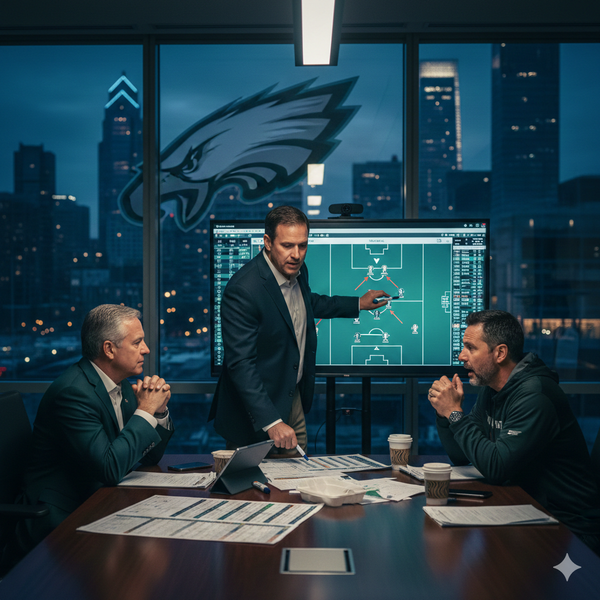
Once a team tastes success in the NFL, that taste becomes an addiction. For the fans, "competitive" is no longer the benchmark—championships are. Take the Philadelphia Eagles, for example. Despite winning the Super Bowl just two years ago and clinching their division for the second consecutive year, the front office wasn't satisfied. They hit the reset button anyway, completely overhauling the offensive coaching staff. In Philly, winning the division is just a baseline; if the "eye test" fails, the heads will roll.
The Minnesota Vikings are living a different kind of nightmare. They just watched their former bridge QB, Sam Darnold, hoist the Lombardi Trophy for the Seahawks after leading them to a 14-3 season. Meanwhile, in Minnesota, the JJ McCarthy era is already under fire after just one year. Between nagging injuries and inconsistent play, McCarthy struggled, and the frustration was visible—none more so than from star receiver Justin Jefferson, whose numbers took a massive hit as he paced the sidelines in visible frustration. Now, rumors are swirling that the Vikings might trade for Kyler Murray, a move that feels like a desperate gamble on another injury-prone talent.
The Great Divide: Underachievers vs. Overachievers
This past season was defined by two extremes. We saw heavyweights crumble under the weight of their own expectations, while "afterthought" franchises surged.
- The Underachievers: Commanders, Vikings, Dolphins, Eagles, and Lions.
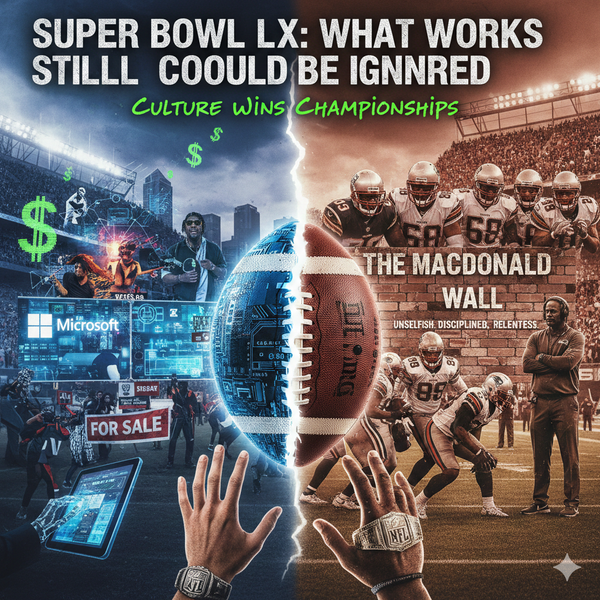
- The Overachievers: Patriots (who made a Cinderella run to the Super Bowl), Seahawks, Jaguars, and Bears.
The lesson of 2025 is simple: once you pay a guy "Franchise QB" money, the grace period ends. The expectation isn't just winning; it’s dominance. If you fail to deliver, your seat isn't just warm—it’s on thin ice, along with every coach and GM who signed your paycheck.
Section II: "Franchise" QBs for Sale
Before we dive into the names, we have to ask: What is a "Franchise Quarterback" anymore? Historically, the "Franchise QB" was the cornerstone—the guy you stuck with through thick and thin. It wasn't just about elite arm talent; it was a marriage. You built together, suffered together, and grew together. Today, those lines have been blurred by the $300M cap. The "marriage" has been replaced by a performance-based lease. The new reality is simple: If you get paid top dollar, the expectation is that you carry the team even when the front office can no longer afford elite pieces around you. This has triggered a "coaching arms race" similar to the race for AI—teams are desperate to hire the youngest, most innovative offensive coordinators just to squeeze every bit of value out of their $50M+ investment.
The 2026 Quarterback Carousel
Because the "marriage" is dead, we are seeing names on the move that would have been unthinkable five years ago.
- The "Discarded" Stars: Names like Tua Tagovailoa, Kyler Murray, and Daniel Jones are officially on the market. These were guys who were supposed to be "the future," but the business moved faster than their development.
- Veterans on the Move: Expect to see Kirk Cousins, Anthony Richardson, and Malik Willis in new uniforms for the 2026 season. Richardson and Willis, once seen as projects with high ceilings, are now being treated as tradable assets in a league that has no time for "patience."
The Dante Moore & Aaron Glenn Factors
The pressure isn't just on the players; it’s a domino effect that hits the draft and the sidelines:
- The Jets' Pivot: With Dante Moore shocking the world by opting to stay at Oregon for another year (for multiple reasons he would want to stay), the New York Jets have been forced to pivot. Without the "slam dunk" rookie option, the pressure on their front office to find a veteran solution is at an all-time high.
- Aaron Glenn's Hot Seat: Perhaps the most "under pressure" man in football is Jets' Head Coach Aaron Glenn. In a historic and embarrassing 2025 campaign, his defense became the first in NFL history to record zero interceptions in a season. For a former DB and defensive-minded coach, that’s not just a stat—it’s a career-threatening failure.
The Wrap-Up Idea
The "marriage" is officially dead. In the modern NFL, everyone is for sale, and everyone is on a timer.
Section III: Football is More Than a Game
The NFL is operating at a fever pitch, and there is zero indication of a slowdown. As the most dominant sports entity in America, its annual revenue is unmatched, but the ambition doesn't stop at our borders. The league's current blueprint is focused on hyper-growth—evolving alongside pop culture to ensure it remains the ultimate entertainment product. With impending TV deal renegotiations and deeper ties to powerhouse brands like EA Sports, Little Caesars, and FanDuel, the league is aggressively scaling its footprint.
While the NFL remains a staple of American Sundays, it has officially launched a global expansion tour. From the packed stadiums in London to the historic return to South America, the league is proving it can thrive anywhere. This season's Super Bowl LX halftime show, headlined by Bad Bunny, served as a massive cultural bridge; it was a clear signal that the NFL is actively courting the international market and inviting casual viewers into the fold. Even the debut of Flag Football on the Olympic stage serves a strategic purpose. By removing the traditional physical barriers of contact football, the league has made the sport more accessible and digestible for a global audience that might be new to the gridiron.
Ultimately, the engine driving this entire machine is fan engagement through sports betting and fantasy football. These aren't just hobbies; they are the lifeblood of the modern NFL. When fans have "skin in the game," their loyalty shifts from a single team to the entire league, ensuring they stay glued to the screen from the first kickoff to the final whistle. At its core, the NFL is a business. Without this relentless drive for new revenue, the game as we know it would look very different—and the massive contracts we see today simply wouldn't exist. It’s a simple reality: more money fuels the game, but it also changes it forever.
Conclusion: Change is Inevitable
The league is undergoing a drastic transformation every single year. At times, this rapid shift makes it feel as though the NFL is losing its grip on the ship. However, as I’ve emphasized before, change is inevitable. To remain successful, an organization must adapt to the shifting tides of the world. Has the NFL lost its traditional identity over the years? Certainly—but that is the cost of evolution.
We are living in the age of the Internet, a generation that has expanded into one massive, interconnected "Meta." In this space, the power of the web allows you to be or do whatever you want. The NFL is no longer just competing with other sports; it is competing against the entire Internet to keep its product digestible and relevant for everyone. For the "core" fans who long for the old ways, it’s a tough pill to swallow. The 2025 season served as the final confirmation that the old era is officially gone. While that shift likely began five years ago, our eyes are finally wide open to the new reality.
The old guard has passed. Enjoy the ride—the 2026 season is going to be a brand-new game.